How Long Does It Take to Build a Website in India? Project Timeline, Stages & Launch Checklist (2026 Guide)
One of the first questions business owners ask before starting a website project is: How long will it take to complete?
Some developers promise a website within a few days, while others estimate several weeks or months. The difference usually comes down to the website's complexity, design requirements, content readiness, integrations and approval process.
A simple business website with a few pages is very different from an e-commerce platform with hundreds of products, payment gateways and order management. Similarly, a custom web application with user accounts, dashboards and backend workflows requires significantly more planning and development.
Understanding how long does it take to build a website helps businesses plan budgets, coordinate content, set realistic launch dates and avoid unnecessary project delays.
In this guide, we explain realistic website development timelines in India, the stages involved, what can delay a project, and what business owners should prepare before development begins.
1. How Long Does It Take to Build a Website?
The time required depends on the website type, features, design complexity and availability of content.
For planning purposes, the following are broad estimates for professionally developed projects:
- Simple landing page: A few days to around two weeks.
- Basic business website: Approximately 2–4 weeks.
- Custom-designed business website: Approximately 4–8 weeks.
- E-commerce website: Approximately 6–12 weeks or longer.
- Custom web application: Several months, depending on functionality.
These are indicative planning ranges, not guaranteed delivery commitments. A project with ready content, approved designs and a clear scope may finish sooner. Complex integrations, delayed approvals and changing requirements can extend the timeline.
The important point is that website development is not just coding. It includes planning, content preparation, design, development, testing and launch.
2. Website Development Timeline by Website Type
Different websites require different levels of effort.
1. Landing Page: A Few Days to 2 Weeks
A landing page is usually built around one specific objective, such as collecting enquiries, promoting a service or generating registrations.
Typical components include:
- Hero section.
- Service or product information.
- Benefits and key features.
- Testimonials or trust elements.
- Call-to-action buttons.
- Enquiry form.
- Contact information.
A landing page can be completed relatively quickly when the content, design direction and requirements are ready.
However, custom animations, multiple form integrations, tracking configuration and additional revisions can extend the timeline.
Best suited for: Advertising campaigns, product launches, lead-generation campaigns and individual service promotions.
2. Basic Business Website: 2–4 Weeks
A basic business website generally includes pages such as:
- Home.
- About Us.
- Services.
- Portfolio or Gallery.
- Blog.
- Contact.
The development process includes creating the page layouts, adding content, making the website responsive and configuring essential functionality.
The timeline can increase if the business requires custom graphics, additional pages, advanced animations or special integrations.
Best suited for: Clinics, consultants, local businesses, professional service providers and small companies.
3. Custom-Designed Business Website: 4–8 Weeks
A custom-designed website involves more planning and design work than a standard template-based project.
It may include:
- Custom UI/UX design.
- Unique page layouts.
- Custom navigation.
- Interactive elements.
- Backend functionality.
- Content management features.
- Third-party integrations.
- Advanced forms.
The design may need to be reviewed and approved before development begins.
Best suited for: Growing businesses, established brands, B2B companies and organisations with specific design or functionality requirements.
4. E-Commerce Website: 6–12 Weeks or Longer
An e-commerce website requires more than product pages and a shopping cart.
Typical development requirements include:
- Product catalogue.
- Categories and filters.
- Product images and descriptions.
- Shopping cart.
- Checkout process.
- Payment gateway integration.
- Shipping configuration.
- Order management.
- Customer accounts.
- Inventory management.
- Transactional email notifications.
Product data preparation can become a major dependency. A store with hundreds of products requires more content preparation and testing than a small catalogue.
Payment, shipping and tax-related workflows also need to be tested before launch.
Best suited for: Retailers, manufacturers, wholesalers and businesses selling products online.
5. Custom Web Application: Several Months
A custom web application is different from a standard business website.
It may include:
- User registration and login.
- Admin dashboards.
- Role-based access.
- Database management.
- API integrations.
- Automated workflows.
- Reports and analytics.
- Customer or employee portals.
- Custom business logic.
The timeline depends on the number of modules, user roles, integrations, security requirements and testing needs.
Larger applications are usually developed in phases rather than delivered as one large release.
Best suited for: Businesses that need custom internal tools, customer portals, workflow automation or specialised software.
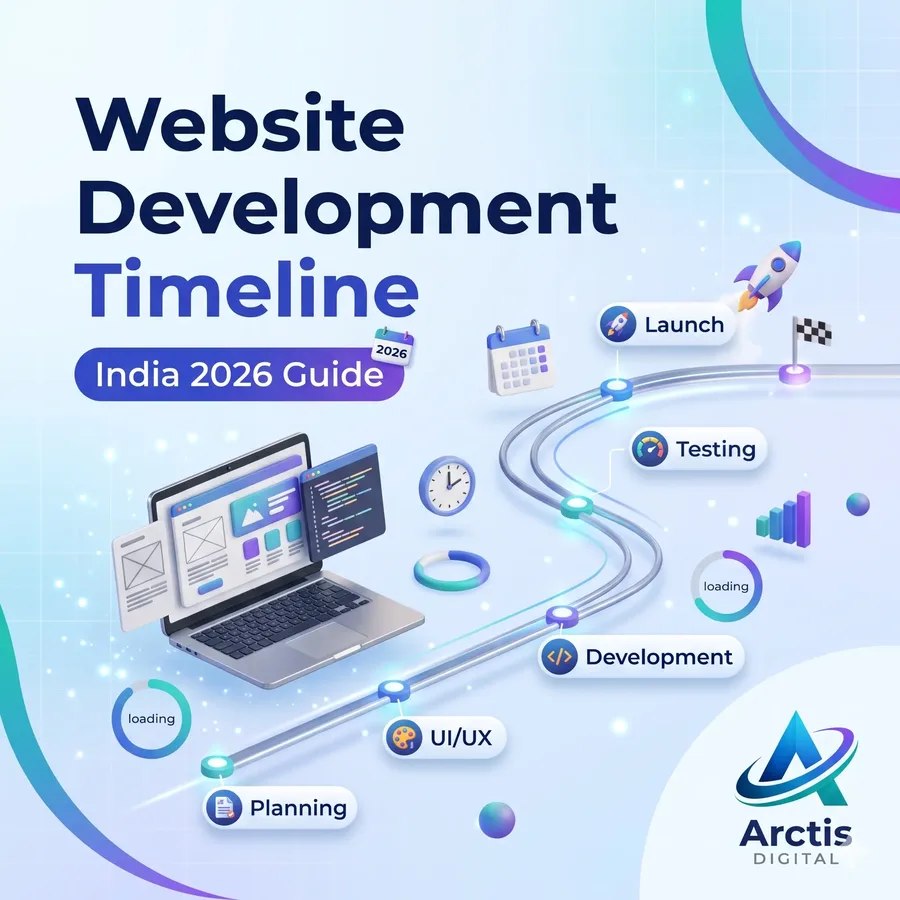
3. Website Development Process: Stage-by-Stage Timeline
A professional website project usually moves through several stages. Some activities can happen simultaneously, while others depend on approvals from earlier stages.
Stage 1: Requirement Gathering and Planning
Indicative duration: 2–5 working days
The first step is understanding the business and its website requirements.
The development team should identify:
- Business goals.
- Target audience.
- Required pages.
- Main website features.
- Design preferences.
- Reference websites.
- Required integrations.
- Content responsibilities.
- Expected launch date.
The scope should be documented before development begins.
For example, a business website may initially require five pages. If the client later requests a customer login system, booking functionality and a custom dashboard, the project scope changes considerably.
Clear planning prevents avoidable misunderstandings.
Stage 2: Sitemap and Website Structure
Indicative duration: 1–3 working days
A sitemap defines the website's page structure and how different sections connect.
For example:
- Home.
- About.
- Services.
- Service A.
- Service B.
- Portfolio.
- Blog.
- Contact.
The structure should help visitors find information without unnecessary navigation.
It also provides a foundation for SEO-friendly URLs and internal linking.
Stage 3: Content Collection and Preparation
Indicative duration: 3–10 working days
Website content includes:
- Page headings.
- Service descriptions.
- Company information.
- Product descriptions.
- Images.
- Testimonials.
- Contact information.
- Calls to action.
This stage can happen alongside design work, but the content must be ready before the relevant pages can be finalised.
One common project delay is waiting for the business owner to provide text, product details, photographs or approvals.
If content writing, photography or graphic design is included in the project, allow additional time for those activities.
Stage 4: UI/UX Design
Indicative duration: 4–10 working days
The design stage focuses on how the website looks and how visitors interact with it.
It may include:
- Wireframes.
- Page layouts.
- Typography.
- Colour selection.
- Navigation design.
- Buttons and forms.
- Responsive layouts.
- Interactive elements.
The design should be reviewed before full development begins.
If major layout changes are requested after development has started, the project may require additional work.
Stage 5: Frontend Development
Indicative duration: 5–12 working days
Frontend development converts approved designs into functional website pages.
This includes:
- HTML structure.
- CSS styling.
- JavaScript interactions.
- Responsive layouts.
- Navigation.
- Animations.
- Forms and interface components.
The website should be tested on different screen sizes, including mobile phones, tablets and desktops.
Stage 6: Backend Development and Integrations
Indicative duration: 3–15 working days or longer
Not every website requires custom backend development.
However, projects with dynamic content or custom functionality may need:
- Database configuration.
- Admin panels.
- Authentication.
- Form processing.
- API integrations.
- Email notifications.
- Payment gateways.
- Booking systems.
- Customer dashboards.
The time depends on the complexity of the backend and the reliability of the external services being integrated.
For example, a simple contact form is significantly less complex than a booking system connected to a CRM and payment gateway.
Stage 7: Testing and Quality Assurance
Indicative duration: 2–5 working days for a small website; longer for complex projects
Before launch, the website should be checked for functionality, compatibility and usability.
Testing should cover:
- Navigation links.
- Contact forms.
- Form validation.
- Email notifications.
- Mobile responsiveness.
- Browser compatibility.
- Image loading.
- Page performance.
- Broken links.
- Basic accessibility.
- Security configuration.
- SEO essentials.
For e-commerce websites, additional testing is required for cart functionality, checkout, payments, order confirmation and shipping workflows.
Stage 8: Deployment and Launch
Indicative duration: 1–3 working days
Once testing and approvals are complete, the website can be deployed to the production environment.
Typical launch activities include:
- Connecting the domain.
- Configuring DNS.
- Enabling HTTPS.
- Setting up hosting.
- Deploying website files.
- Configuring the database.
- Checking redirects.
- Testing forms on the live domain.
- Submitting the sitemap where appropriate.
- Verifying analytics and search tools.
DNS changes and external verification processes may take additional time.
The website should be checked again after deployment because a staging environment and live production environment may behave differently.
4. What Factors Affect Website Development Time?
Even websites with similar page counts can have very different development timelines.
Here are the most important factors.
1. Number of Pages
A five-page business website generally requires less work than a website with 30 custom-designed pages.
However, page count alone does not determine complexity. A single page with complex interactive functionality can take longer than several standard informational pages.
2. Custom Design Requirements
A standard layout can be implemented relatively quickly.
Custom illustrations, advanced animations, interactive sections and unique page structures require additional design and development time.
3. Content Availability
If the business provides approved text, images and product information at the beginning, development can proceed more smoothly.
If the team must repeatedly wait for content, the project timeline can increase.
4. Custom Functionality
Features such as booking systems, customer accounts, dashboards and payment workflows require additional planning, coding and testing.
5. Third-Party Integrations
Connecting external services may involve:
- API documentation.
- Authentication.
- Data mapping.
- Webhook configuration.
- Error handling.
- Testing.
An integration can take longer if the external provider has technical limitations or requires account approval.
6. Number of Revision Rounds
Design changes are normal, but unlimited revisions can make the timeline unpredictable.
Agree on review rounds and approval milestones before starting the project.
7. Client Feedback and Approvals
A development team cannot finalise every stage without the required decisions and approvals.
If a design is waiting for approval for a week, the launch date may move even if the development team is ready to continue.
5. Sample Website Development Timelines
The following examples are planning illustrations. They are not fixed industry delivery standards.
Example A: Small Business Website
Estimated overall duration: 2–4 weeks
- Week 1: Planning, sitemap, content preparation and design.
- Week 2: Frontend development and responsive layouts.
- Week 3: Forms, content integration and testing.
- Week 4: Revisions, final approval and launch.
Some activities may overlap, so the actual schedule can be shorter or longer.
Example B: E-Commerce Website
Estimated overall duration: 6–12 weeks or longer
- Week 1: Requirements and store planning.
- Week 2: UI/UX design and product structure.
- Weeks 3–5: Store development and product integration.
- Weeks 5–7: Payment, shipping and notification integrations.
- Weeks 8–9: Testing and corrections.
- Weeks 10–12: Final approvals, launch preparation and deployment.
The product catalogue, payment configuration and shipping rules can significantly affect the timeline.
Example C: Custom Web Application
Estimated overall duration: Several months
A custom application may be delivered through separate milestones:
- Discovery and requirements.
- Technical architecture.
- UI/UX design.
- Backend and database development.
- Frontend development.
- API integrations.
- Security and functional testing.
- Deployment.
- User acceptance testing.
A minimum viable product (MVP) can be released first, followed by additional modules in later phases.
This approach helps businesses validate important functionality before investing in a much larger system.
6. Why Do Website Development Projects Get Delayed?
A project can be technically straightforward and still miss its expected launch date.
The following problems commonly create delays.
1. Starting Without a Clear Scope
If the requirements are not documented, new features may keep appearing during development.
Solution: Approve a written scope containing pages, features, integrations and exclusions before work begins.
2. Late Content Submission
Missing text, photographs, product details and company information can prevent pages from being completed.
Solution: Prepare a content checklist and assign responsibility for every required item.
3. Frequent Design Changes
Repeatedly changing approved layouts can affect frontend development and testing.
Solution: Review the design carefully and approve the important page layouts before development.
4. Unclear Revision Limits
If the agreement does not define revision rounds, disagreements can occur about what is included.
Solution: Document the number of included revision rounds and how additional changes will be handled.
5. Delayed Third-Party Access
Payment gateways, email services, analytics platforms and external APIs may require account access, verification or configuration.
Solution: Identify all external dependencies during planning and arrange access early.
6. Skipping Testing to Meet a Deadline
Launching without testing may create broken forms, payment problems, layout issues and other avoidable defects.
Solution: Reserve time for quality assurance rather than treating testing as optional.
7. Adding New Features Near Launch
A new booking system or customer dashboard introduced at the final stage may require substantial additional development.
Solution: Treat new requirements as scope changes and review their effect on cost and delivery dates.
7. How Can You Get Your Website Built Faster?
Speed should not come at the expense of quality.
These steps can help reduce unnecessary delays.
- Define the website's main objective before development.
- Prepare the page list and feature requirements.
- Share your logo, brand colours and reference websites.
- Provide approved content and images early.
- Assign one person to coordinate feedback.
- Approve designs within the agreed review period.
- Arrange domain and hosting access in advance.
- Provide third-party account credentials securely when required.
- Avoid introducing major features after development starts.
- Keep time reserved for testing and final corrections.
A clear scope and faster decision-making can improve the overall project schedule without forcing developers to skip important work.
8. What Should You Prepare Before Hiring a Website Development Company?
Before starting a website project, prepare the following information.
Business Information
- Company or business name.
- Business description.
- Target audience.
- Products or services.
- Contact details.
- Business location.
Website Requirements
- Main purpose of the website.
- Required pages.
- Required features.
- Reference websites.
- Preferred design direction.
- Mobile requirements.
- Required integrations.
Content and Assets
- Logo.
- Brand colours.
- Website text.
- Product or service images.
- Team or company photographs.
- Testimonials, if available.
- Legal and policy information, where applicable.
Technical Requirements
- Domain ownership and access.
- Hosting requirements.
- Business email requirements.
- Payment gateway requirements.
- Analytics requirements.
- Search Console access.
- Existing website details, if applicable.
Project Management
- Approved project scope.
- Budget.
- Expected launch date.
- Payment milestones.
- Revision policy.
- Testing and approval process.
- Ownership and handover terms.
Preparing these details helps the development company estimate the project more accurately.
9. Does a Faster Website Development Timeline Mean Better Quality?
Not necessarily.
A developer may be able to launch a simple website quickly by using an existing template and ready-made components.
That does not automatically make the result poor. Templates can be appropriate for projects with straightforward requirements.
However, a rushed project may create problems when important activities are skipped, such as:
- Requirement analysis.
- Responsive testing.
- Form testing.
- Performance checks.
- Security configuration.
- SEO setup.
- Content review.
- Deployment verification.
The goal should be to deliver the required website within a realistic timeline, not simply to launch it as quickly as possible.
A reliable project plan explains what will be delivered, what the client must provide, which milestones require approval and what happens when the scope changes.
10. Website Development Timeline vs Website Development Cost
Time and cost are connected, but they are not interchangeable.
A project may take longer because it includes additional design work, custom functionality, complex integrations or more testing.
Similarly, a shorter project is not automatically cheaper if it requires experienced developers and dedicated resources.
Before comparing quotations, review:
- Total project scope.
- Design and development responsibilities.
- Number of pages.
- Backend requirements.
- Integrations.
- Testing and deployment.
- Content preparation.
- Post-launch support.
- Ownership and handover.
Read our detailed guide: How Much Does a Website Cost in India? Complete Pricing Guide.
11. Website Launch Checklist
Before making the website publicly available, complete these checks.
Design and Content
- All approved pages are complete.
- Text has been reviewed.
- Images are correctly displayed.
- Navigation is working.
- Calls to action are clear.
- Mobile layouts are checked.
Functionality
- Contact forms work.
- Form submissions reach the correct destination.
- Email notifications are working.
- Buttons and links work.
- Integrations have been tested.
- Error messages are understandable.
SEO and Performance
- Page titles and meta descriptions are configured.
- URLs are readable.
- Heading structure is appropriate.
- Images have suitable alternative text.
- XML sitemap is available where applicable.
- Robots directives are checked.
- Redirects are configured where required.
- Core Web Vitals and page performance are reviewed.
Security and Deployment
- HTTPS is enabled.
- Admin access is secured.
- Required backups are available.
- Hosting configuration is checked.
- DNS records are correct.
- Website files are deployed correctly.
- Important pages return the expected status codes.
Final Handover
- Website ownership is clear.
- Domain access is transferred or documented.
- Hosting access is provided.
- Source files and required credentials are handed over securely.
- Admin usage instructions are provided.
- Post-launch support terms are documented.
Frequently Asked Questions
1. How long does it take to build a website in India?
A simple business website commonly takes around 2–4 weeks, while a more customised business website may take 4–8 weeks. E-commerce projects and custom web applications generally require more time depending on their features and integrations.
2. Can a business website be built in 7 days?
It can be possible for a small, clearly scoped website when content, images, design direction and approvals are ready. A complex custom website should not be expected to follow the same timeline.
3. How long does it take to build a 5-page website?
A five-page business website may take approximately 2–4 weeks, depending on the design, functionality, content readiness and review process.
4. How long does it take to develop an e-commerce website?
A relatively straightforward e-commerce website may take around 6–12 weeks or longer. Product catalogue size, payment integration, shipping configuration and custom functionality affect the schedule.
5. Why does website development take so long?
Website development involves more than coding. Planning, content preparation, design approval, backend development, testing, corrections and deployment all require time.
6. Can I speed up the website development process?
Yes. Provide content early, approve designs on time, define the project scope clearly and arrange access to required services before development begins.
7. Does website content affect development time?
Yes. Missing text, photographs, product information and other content can delay page completion and approval.
8. Does custom website development take longer than template-based development?
Usually, yes. Custom development requires more planning, design and implementation. However, the difference depends on the actual features and complexity.
9. How long does it take to redesign an existing website?
A simple redesign may take a few weeks, while a larger redesign involving content restructuring, new functionality, URL changes and SEO migration can take longer. Existing website complexity and migration requirements matter.
10. What happens after a website is launched?
After launch, the website should be monitored for functionality, performance, security and technical issues. Forms, analytics, backups, updates and other important components should be checked regularly.
Final Thoughts
A website development project does not have one fixed timeline.
A simple landing page may be completed within days, while a custom-designed business website can require several weeks. E-commerce platforms and custom web applications may need months of planning, development and testing.
The most important factors are the website's scope, design complexity, content readiness, integrations and approval process.
Understanding how long does it take to build a website helps business owners plan more realistically and work effectively with their development team.
Instead of choosing a developer based only on the promise of the fastest delivery, look for a clear project scope, realistic milestones, proper testing and transparent communication.
Planning a new business website?
Arctis Digital provides website development, UI/UX design, backend and API development, e-commerce solutions and custom software services.
Visit Arctis Digital or contact our team to discuss your website requirements.
Official References and Useful Resources
- Shopify – How Long Does It Take to Build a Website?
- Google Search Central – SEO Starter Guide
- Google Search Central – Core Web Vitals
- W3C – Web Accessibility Initiative
- Google PageSpeed Insights
Related Guides from Arctis Digital
- How to Choose a Website Development Company in India in 2026
- How Much Does a Website Cost in India? Complete Pricing Guide
- Website Development Agreement Checklist for Indian Businesses: Scope, Payments, Ownership & Handover (2026 Guide)
- Website vs Landing Page: Which Does Your Business Need in 2026?
- Website Redesign Checklist for Indian Businesses: SEO, UX, Performance & Launch Guide (2026)
- How to Create a High-Converting Website Quote Request Form: Fields, Design & Lead Routing (2026 Guide)